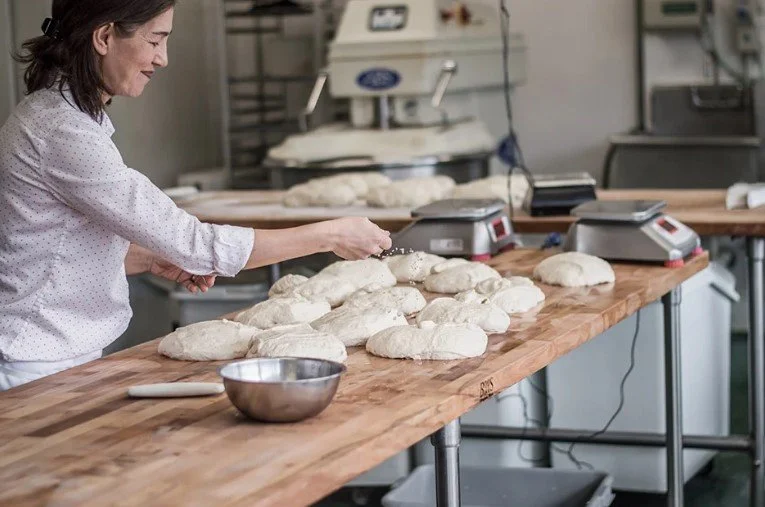
Investing in the right commercial bakery equipment is one of the most important decisions any bakery owner can make. Whether you're launching a new bakery, upgrading existing machinery, or expanding production capacity, your equipment directly influences product quality, operational efficiency, labour costs, and long-term profitability.
Every successful bakery relies on a carefully planned production line where each piece of equipment works together seamlessly. From mixing and proofing to baking, cooling, slicing, and packaging, selecting machinery that matches your production requirements ensures smoother workflows and consistent results.
Rather than choosing equipment based solely on price or brand, it's important to evaluate your business goals, production volume, available space, and future expansion plans. Here's everything you need to know when selecting commercial bakery equipment that supports both your current operations and long-term success.
Understand Your Bakery's Production Requirements
Before purchasing equipment, take time to assess your production needs.
Ask yourself questions such as:
· How many products do you produce each day?
· What types of baked goods make up your menu?
· Are you serving retail customers, wholesale clients, or both?
· Do you anticipate significant growth over the next few years?
· How many staff members will operate the equipment?
A small artisan bakery producing handcrafted sourdough requires a very different setup from a large wholesale operation manufacturing thousands of bread rolls daily. Understanding your production goals allows you to choose equipment with the right capacity and functionality while avoiding unnecessary expenses.
Choose Equipment That Matches Your Product Range
Every bakery specialises in different products, and each product has unique production requirements.
For example:
· Bread production benefits from spiral mixers, proofers, and deck or rotary ovens.
· Cakes and pastries often require planetary mixers, convection ovens, and depositors.
· Croissants and laminated doughs require dough sheeters for consistent thickness.
· Pizza production may require specialised dough processing equipment and stone deck ovens.
Purchasing equipment designed specifically for your product range improves quality, consistency, and production efficiency.
Select the Right Commercial Mixer
The mixer forms the foundation of every bakery operation.
Choosing the correct mixer depends largely on the products you produce.
Spiral Mixers
Spiral mixers are ideal for bread dough because they efficiently develop gluten while maintaining proper dough temperature. They are designed for continuous commercial production and large dough batches.
Planetary Mixers
Planetary mixers offer greater versatility and are suitable for cakes, creams, batters, fillings, icings, and lighter doughs. Many bakeries use both spiral and planetary mixers to maximise production flexibility.
Selecting the appropriate mixer capacity also prevents bottlenecks during busy production periods. Equipment that consistently operates at maximum capacity can reduce productivity and increase wear over time.
Invest in the Right Baking Equipment
Your oven is one of the largest investments in any bakery.
Different oven types are suited to different production requirements.
Deck ovens provide exceptional heat retention and are perfect for artisan breads, pizzas, and specialty loaves.
Convection ovens deliver fast, even heat circulation, making them ideal for pastries, cookies, cakes, and muffins.
Rotary rack ovens offer high-volume production for wholesale bakeries by ensuring consistent baking across multiple trays simultaneously.
Choosing the right oven depends on daily output, product variety, and desired baking characteristics rather than simply selecting the largest model available.
Consider Proofing Equipment
Proper fermentation is essential for producing high-quality bread and baked goods.
Commercial proofers create controlled temperature and humidity conditions that encourage consistent dough development regardless of seasonal weather changes.
Modern proofing cabinets improve production scheduling while reducing product variation between batches. They also allow bakers greater flexibility during busy operating periods.
For bakeries producing significant volumes of bread, investing in reliable proofing equipment often results in better product consistency and reduced waste.
Plan Your Entire Production Workflow
Rather than purchasing equipment individually, consider how every machine fits within your complete production process.
An efficient bakery workflow typically follows this sequence:
· Ingredient preparation
· Mixing
· Dividing
· Moulding
· Proofing
· Baking
· Cooling
· Slicing
· Packaging
When equipment is positioned logically, staff spend less time transporting products between workstations, improving productivity while reducing physical strain.
Well-designed workflows also minimise cross-contamination risks and support food safety compliance.
Don't Forget Cooling and Finishing Equipment
Many bakery owners focus primarily on mixers and ovens while overlooking post-baking processes.
Cooling racks, bread slicers, packaging equipment, and storage solutions all contribute to efficient production.
Allowing products to cool properly before slicing and packaging preserves texture, extends shelf life, and improves overall product quality.
Automated finishing equipment can also reduce labour requirements while increasing consistency across every batch.
Evaluate Capacity for Future Growth
One of the most common purchasing mistakes is buying equipment based solely on current production volumes.
Instead, think ahead.
Ask yourself:
· Will production double within five years?
· Are wholesale contracts likely?
· Will you introduce new product lines?
· Could you expand to multiple retail locations?
Purchasing equipment with moderate additional capacity often proves more cost-effective than replacing undersized machinery after only a few years.
Scalable equipment gives your bakery flexibility while supporting sustainable business growth.
Prioritise Energy Efficiency
Energy costs represent a significant portion of bakery operating expenses.
Modern commercial bakery equipment is designed with efficiency in mind through features such as:
· Improved insulation
· Programmable controls
· Digital temperature management
· Automatic standby functions
· Efficient heating systems
Although energy-efficient equipment may require a larger initial investment, reduced operating costs often deliver substantial savings throughout the equipment's lifespan.
Lower energy consumption also supports more sustainable business operations.
Consider Maintenance and Service Support
Reliable equipment is only part of the equation.
Professional servicing, preventative maintenance, and readily available spare parts help minimise downtime and maximise equipment lifespan.
Before making a purchase, consider whether your supplier offers:
· Technical support
· Preventative maintenance programs
· Local service technicians
· Spare parts availability
· Equipment training
· Comprehensive warranty coverage
Strong after-sales support helps keep your bakery operating smoothly during busy production periods.
Choose a Trusted Commercial Bakery Equipment Partner
Selecting the right supplier is just as important as selecting the equipment itself.
An experienced commercial bakery equipment specialist can recommend machinery based on your production goals, available space, workflow, and future expansion plans.
Rather than selling individual machines, a knowledgeable supplier can design an integrated production solution that improves efficiency while supporting long-term business growth.
This professional guidance helps reduce costly purchasing mistakes and ensures every investment delivers maximum value.
Final Thoughts
Choosing the right commercial bakery equipment is about much more than purchasing ovens and mixers. Every piece of equipment should work together to create a smooth, efficient production process that delivers consistent quality while supporting business growth.
By carefully evaluating your production volume, product range, workflow, available space, and long-term objectives, you can build a bakery operation that performs efficiently today while remaining flexible for tomorrow's opportunities.